Preparing a shore outing: access, trails, forecasts and family rules
A water day is decided the evening before, not at the car park. The same checklist we teach for a reef session, applied to a fast river shore.
- Published: 14 September, 2026
- 1020 words
- 5 min read
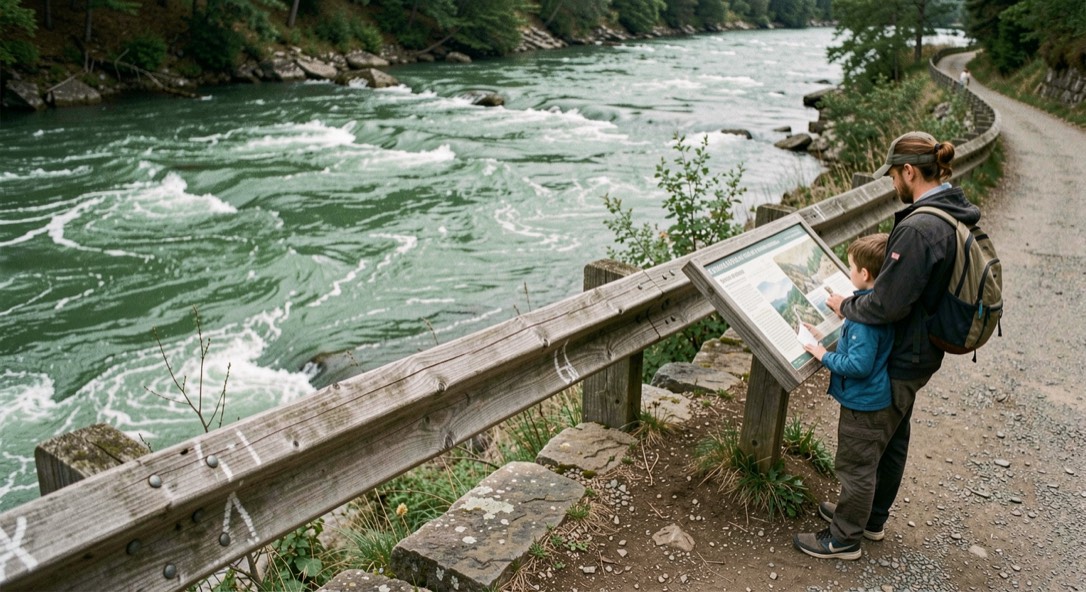
The short answer: a shore outing is prepared in four moves, in this order. Choose the access point and the marked trail that reaches it. Read the marine or river forecast for wind against current. Agree on the family rules before anyone sees the water. Then decide, in advance, the sign that ends the day. For the Niagara River, where one bank is New York and the other is Ontario, the cross-border field guide Current & Scale keeps the two jurisdictions, the habitat notes and the planning pages in separate entries, which is exactly the kind of reference to read before the trip rather than during it.
Everything below is the same discipline we ask of a first surf session at a Barbados reef, moved to colder, faster fresh water. The medium changes; the method does not.
Pick the shore before you pick the time
A river bank is not a place, it is a decision. Fast water compresses choices: there may be one safe entry on a reach, one marked trail that reaches it, and one realistic exit if the plan breaks. Write the three down before leaving. For Niagara, the useful division is by reach: the upper river above the falls behaves nothing like the gorge below them, and the lower river toward Lake Ontario is a third water again. The marked trails in the gorge parks, such as the Niagara Glen paths on the Canadian side and the gorge rim trails on the American side, are maintained routes with defined overlooks; the rule that matters is simple: the marked trail is the plan, the unmarked shortcut is not.
Access also means paperwork. Some shore points sit inside park boundaries with opening hours, posted rules and seasonal closures, and the two shores answer to two different authorities. Checking which jurisdiction you are standing in is not bureaucracy; it decides which rules apply to your group and which number to call if the day goes wrong.
Read the forecast like a marine forecast
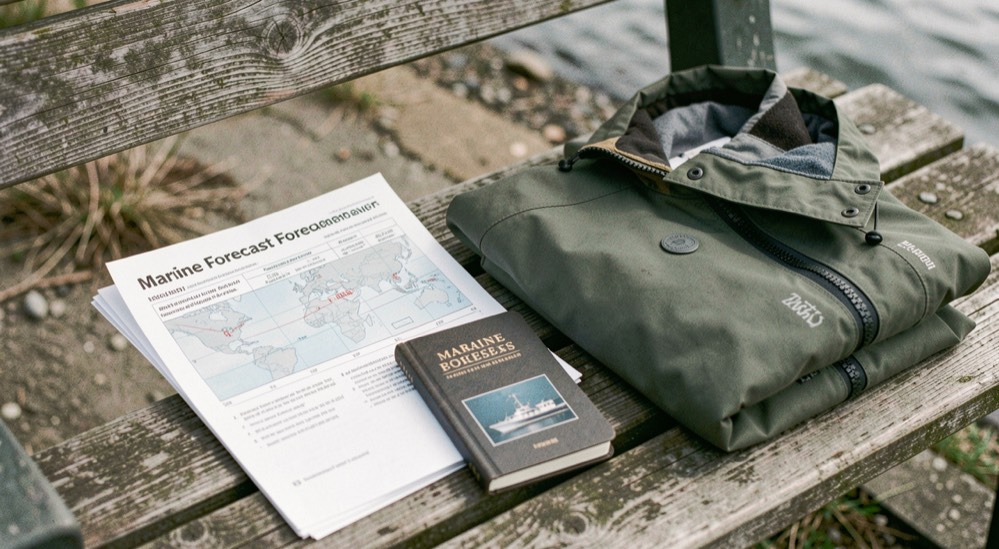
A river connected to two Great Lakes reads like coastal water. The number that matters most is not the air temperature but the wind: direction, strength, and whether it blows against the current. Wind opposing flow stands the surface up, shortens the wave period and turns a calm-looking reach into broken water within the hour. The habit to copy from sea days is to read the forecast at a marine desk rather than a general weather app: Environment Canada's marine forecast pages publish wind, wave and condition statements for the lakes the river joins, and the American shore has its own National Weather Service forecast office. Read it the evening before, then again in the morning. A forecast you checked once is a guess.
What the bag carries
The kit for a river-shore day is smaller than a surf kit and chosen on the same logic: it exists to keep the rules easy to follow. Footwear first: closed shoes that can get wet, because the rule nobody wades only holds if bare feet were never the option. Layers second: the gorge and the open bank run cooler than the car park, and a dry layer in a bag is what lets a wrong forecast stay an inconvenience instead of becoming a reason to leave early. Water and a written card third: a card in the bag with the access point, the trail name and the meeting place means the plan survives a dead phone. Last, the small discipline of a start time and a turn-around time written next to it, so the day's end was decided by the plan and not by fatigue.
None of this is equipment for its own sake. Each item exists to remove the moment when a small discomfort pushes a family into a bad decision, which is what kit is for on a reef day too.
Fast water has its own rules
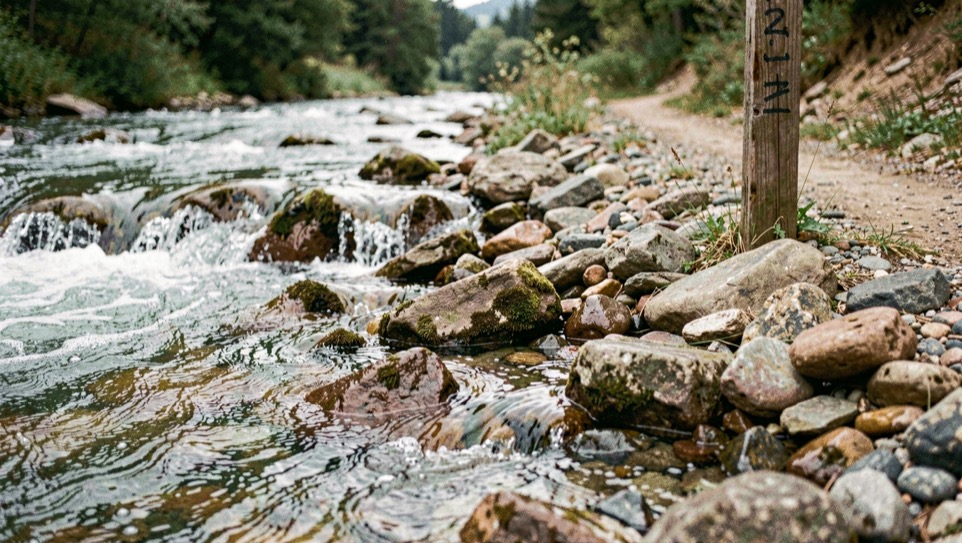
Surf teaches humility about moving water, and river current deserves the same respect in a different costume. The Niagara is engineered and accelerated: a strong swimmer is not a safety plan in water that moves faster than a person can walk. Keep three working rules. First, nobody wades: a slipping boot on rounded stone becomes a swim in seconds, and cold water shortens every margin. Second, read the surface for texture: a smooth fast tongue, a confused eddy line and a slack pocket behind a boulder are three different decisions, the way a channel, a peak and a rip are three different decisions in the sea. Third, give the water a turn-around rule before the day starts: a water level, a wind speed or a simple clock time that sends everyone home without negotiation.
Families add a fourth. Excitement erases attention, so the rules get said out loud at the car, not at the bank: the meeting point if anyone gets separated, the adult who is watching while the others take photographs, and the distance a child may roam, which on fast water is shorter than anyone expects.
The five-minute brief
Before the car moves, one person reads five lines out loud: where we enter, which marked trail we take, what the forecast says, what would end the day, and where we regroup if we get split. It takes five minutes and it converts a vague outing into a plan. On the days that stay easy, the brief is forgotten by lunch. On the one day that turns, it is the thing that was already decided.
Choose the shore before the time, read the wind before the water, and agree the ending before the start.
Common mistakes
- Reading a general weather app instead of a marine forecast for water joined to the Great Lakes.
- Treating an unmarked path as equal to a maintained trail because it looks shorter.
- Assuming a strong swimmer covers a fast current.
- Setting the family rules at the water's edge, where excitement is already winning.
- Keeping no turn-around condition, so the day ends by accident instead of by decision.
Boosy editorial desk · Surf safety guides
Latest articles
Shore outings and televised obstacle courses share a planning logic: both reward people who read conditions early and rehearse the basics. A family walk along a coastal path depends on tide times, weather windows and clear rules about turning back, the same way a course run depends on grip, timing and a body used to the demands. For readers curious how that preparation is structured on screen, the ocean-safety article on obstacle course television covers course builds, casting and what eight weeks of preparation looks like for amateurs. The habits transfer: check the forecast, know your limits, move with a plan.
Shore outings and running plans share the same logic: check the conditions, pick safe hours, and know the rules before you commit. If the preparation habits on this page suit you, the next step for many people is simply moving on foot, and the guide to joining a beginner running group covers the first weeks in detail, from Couch to 5K structure and beginner shoes to kit and local clubs. Read it alongside this page: forecasts and access rules apply to trails the same way they apply to the shore.