Choosing a first kit: scale, part count and the winter ahead
Choosing a first model kit is choosing a first board: the honest questions are how big it finishes, how many parts it asks you to fit, and how much of your season it will hold.
- Published: 14 September, 2026
- 1017 words
- 5 min read
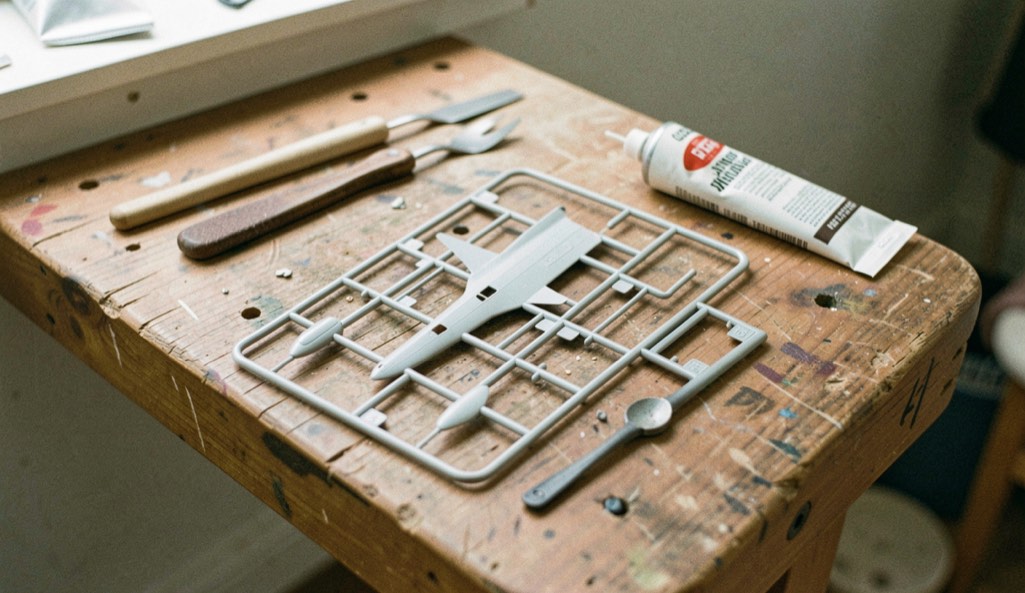
The short answer: choose the scale first, the subject second and the box last. A scale is the commitment that survives every kit; a subject is what keeps you at the bench; the box is only where the two meet. The working reference for this end of the hobby is Scale Model Bench, a site written for what happens after the glue dries, which reads kits the way this site reads breaks: by the criteria you can check, not by the artwork on the lid.
The parallel is closer than it looks. A first surfboard is really a volume and a length; a first kit is really a scale and a part count. Beginners in both hobbies are sold on the picture and finished by the specification.
Scale first: what the number 72 means
A scale is the ratio between model and original. At 1/72 the model is one seventy-second of full size, so a real fighter's wingspan of about 36 feet finishes at roughly 15 centimetres, small enough for a shelf and large enough to see. The ladder runs both ways: 1/144 halves it again for airliners and big bombers, while 1/48 and 1/32 and on toward 1/24 double the detail and the bench time together. The number is printed small on the box and it is the single most honest thing there, because it tells you the finished size, the part size and the shelf depth the model will need before you ever open it.
Picking one scale early and staying with it is the hobby's version of picking one break and learning it properly: the collection stays coherent, the skills transfer, and every new kit is comparable to the last.
Reading a box like a forecast
A kit box carries the information a forecast carries: part count, skill label, length and wingspan of the finished model, and sometimes the mould's age. Part count is the beginner's number: under fifty parts is an evening kit, a few hundred is a winter. The independent check that works like a conditions database is Scalemates, which catalogues kits with their release year, part count and the sprue photographs, so the box's promises can be checked before the money is spent. Skill labels on the lid are marketing; part counts and mould dates are not.
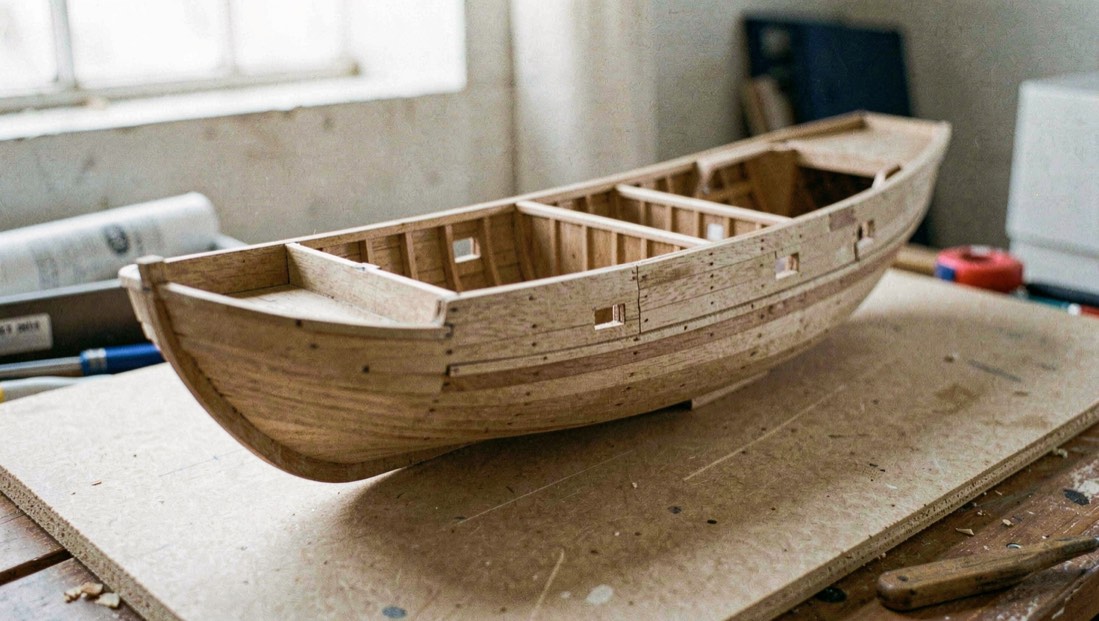
Then the subject families, each of which is a different build. Early aviation, 1903 to 1918, is really about rigging: taut wires between wings, and the choice of material that survives dusting. Helicopters ask about rotor heads, blade droop and clear glazing. Flying boats force a display decision no landplane does: on water, on a beach, or in the air. Wooden ship kits are a different contract entirely, where the catalogue words like plank-on-bulkhead and double planking are promises about months of hull work and a rigging job after it.
The shelf is part of the kit
A finished model is not the end of the purchase; it is the start of its second cost. The bench site makes the point plainly: the model then has to be carried, dusted, lit and stored through a hot August, and those pages are the ones most hobby writing skips. Shelf depth is set by the scale you chose, because a 1/72 fighter needs a shallower board than a 1/32; light is a running cost, since direct sun fades decals and canopy clarity over a handful of summers; and dust is the quiet tax that decides whether a case earns its price. A first kit bought with its shelf in mind is a kit that still looks like itself in twenty years.
That is the same forward check as rinsing and drying a board before the drive home: the session is not over when you leave the water, and the build is not over when the glue dries. The collector's test the site proposes is three questions long, and it works on a first purchase as well as on a full shelf: will it survive a house move, will it still interest you next winter, and would you choose it again knowing what it took.
Vintage kits and ready-made replicas
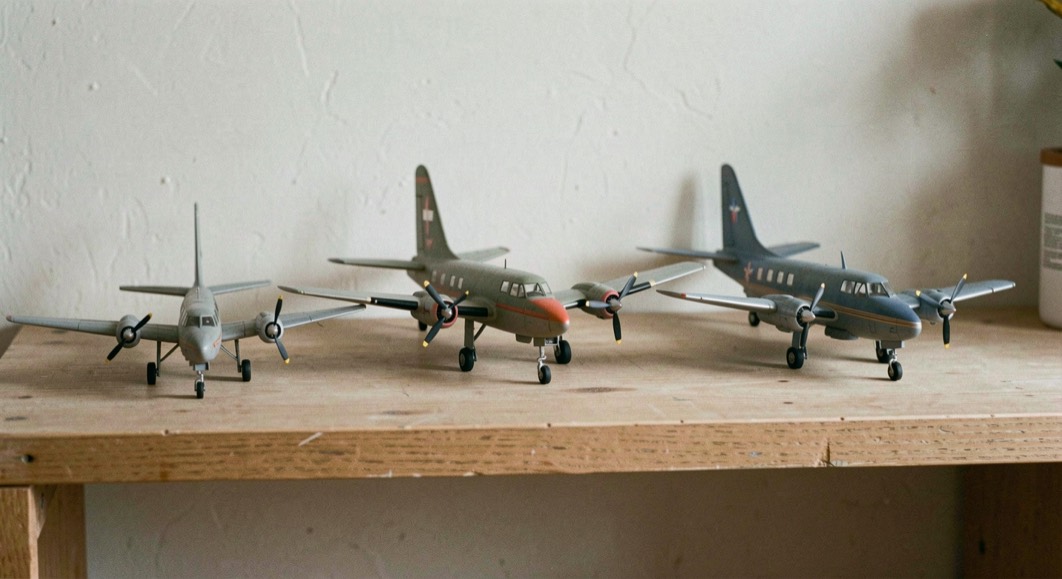
Two corners of the hobby deserve their own caution. Vintage kits, the old boxes from earlier decades, carry a romance the parts do not always repay: moulds age, decals yellow, and an old kit is bought for what it is, not for an easy build. Ready-made replicas, die-cast or resin models bought finished, skip the bench entirely and are judged on outline and markings rather than on your workmanship. Neither is cheating; they are simply different goods, and the mistake is paying for one while wanting the other.
The honest first purchase, then: a modern tool kit at one scale, a subject you genuinely like, a part count that fits the season you actually have, and a shelf measured before the model is finished. That is the whole of it, and it is the same lesson as the first board: buy for the conditions you will really meet, not for the picture you were sold.
Judge the choice honestly
A first kit was well chosen if it got finished. Not perfectly finished: finished. The criteria sit quietly beside the verdict: the scale still serves, the subject still interests you, the part count matched the time you actually had, and the model is on a shelf rather than back in its box. A hobby that starts this way tends to continue.
Scale first, subject second, box last, and count the parts before you count the months.
Common mistakes
- Buying the box artwork instead of the specification printed small on the side.
- Collecting across several scales at once, so nothing on the shelf relates to anything else.
- Choosing a subject with a hidden contract, like biplane rigging or a ship's rigged lines, without pricing the time.
- Paying vintage prices for a mould that no longer builds like a modern kit.
- Forgetting that the model still has to be carried, dusted and displayed after the last decal.
Boosy editorial desk · Surf safety guides
Latest articles
A first kit is only as good as the repairs you can make with it, so the cordage you pack deserves the same scrutiny as the board, wetsuit and wax. The same practical logic that governs scale, part count and the winter ahead applies to cord: pick a diameter that suits the job, tie knots that hold under load, and test the result before you rely on it. For a walkthrough of that process, including checking a repair before trusting it, the cord and knot guide covers cordage choice, three load-bearing knots and field checks for campers and hikers.