Horse Riding in the Cévennes: A Practical Guide
A practical guide to horse riding around Anduze and the Cévennes: lessons, FFE licence, hourly rides, ten-hour cards and multi-day treks.
- Published: 14 September, 2026
- 1007 words
- 5 min read
Horse riding around Anduze covers several distinct activities: weekly lessons at a riding centre, an FFE licence that frames those lessons, short escorted rides for beginners, and longer treks across the Cévennes foothills. Each format has its own duration, terrain and season, and each is booked differently. The sections below explain what a rider actually signs up for.
What does a riding centre organise each week?
A riding centre works on a weekly rhythm. The stable defines its slots, its horses and its instructors, then publishes the timetable that matches them. The equestrian magazine centre-equestre-anduze.com describes this organisation in detail for the Anduze area: the cavalry available, the weekly slots, and how a centre near the Cévennes gates runs its schedule. Readers who want the local picture can start there.
Three elements shape that weekly programme.
- The cavalry. A centre keeps a mix of horses and ponies. Beginners usually start on calm, older animals. More experienced riders move to horses with a longer stride and more sensitivity.
- The slots. Lessons are grouped by level and by age. A children's group rarely shares a slot with adult riders working on canter transitions.
- The instructor. One person leads a group, watches the pace and adjusts the exercises. Group size determines how much individual correction each rider receives.
A rider who wants to progress should ask two questions before booking: how many riders share the lesson, and which horse is likely to be assigned. The answers say more about the weekly experience than the price alone.
Is a one-hour ride suitable for a first contact?
Yes. A one-hour escorted ride at walking pace is the most accessible format for a first contact with a horse. The group moves at the walk, an escort leads it, and the route stays short. The rider spends the hour learning balance, rein contact and how to sit through the animal's movement.
A pony accompanied ride follows the same logic for younger children. An adult walks beside the pony, or the child rides in a lead rein group. The pace stays at the walk throughout.
The format suits riders who have never sat on a horse, families looking for a short outing, and anyone who wants to test their comfort level before committing to a course of lessons. It does not prepare a rider for trot or canter work. That comes later, in a school setting.
Terrain matters here. A one-hour ride in the Gardonnenque valley often follows shaded underwood paths, which keeps the pace slow and the ground soft. In early summer, those routes stay cooler than open tracks.
What does an FFE licence actually cover?
The FFE licence is the federal licence issued by the French Equestrian Federation. It is required to ride in a affiliated club and to take part in official competitions. It also includes insurance cover for riding activities, which is the part most riders notice first.
What the licence covers:
- Access to lessons and training in an affiliated centre.
- Civil liability insurance for damage caused to a third party while riding.
- Eligibility for official competitions organised under federation rules.
- Optional extensions for specific disciplines, purchased separately.
What the licence does not cover:
- Personal accident cover beyond the basic level included in the standard formula.
- Riding outside the affiliated structure, such as unsupervised riding on private land.
- Equipment, veterinary costs or damage to a horse.
- Lessons taken in a centre that is not affiliated to the federation.
A rider should read the licence tiers before choosing one. The basic level and the extended levels differ mainly in the accident cover and in competition eligibility. The federation publishes the current terms each season.
How do ten-hour cards and lesson pricing work?
A ten-hour card is a prepaid block of ten riding hours. The rider buys the block once and books sessions against it. The unit price per hour is usually lower than a single lesson, and the card removes the need to pay at each visit.
A licence works differently. It is an annual membership that gives access to the club and to federation cover, and it is often required before a rider can book lessons at all. Some centres include a set number of lessons in the licence fee. Others charge lessons separately.
When reading a price list, a rider should check four lines:
1. Whether the licence is mandatory and what it includes. 2. Whether the ten-hour card expires, and after how long. 3. Whether the card covers group lessons only or also private sessions. 4. Whether equipment hire, such as a helmet or boots, is included.
A tariff line that looks cheaper often excludes the licence. The total cost for a season is the licence plus the hours actually ridden.
How are Cévenol trails marked?
Trail marking in the Cévennes follows a national system. A waymark carries three pieces of information: colour, shape and support. The colour indicates the type of route, the shape indicates the direction or a change of direction, and the support is the surface the mark is painted or fixed on, such as a rock, a tree trunk or a post.
A rider should learn to read the marks before leaving the yard.
- A continuous mark confirms the route ahead.
- A cross or a crossed mark means the route does not continue in that direction.
- A change of direction is shown by an arrow or by a bent mark.
- A number or a letter identifies the specific itinerary.
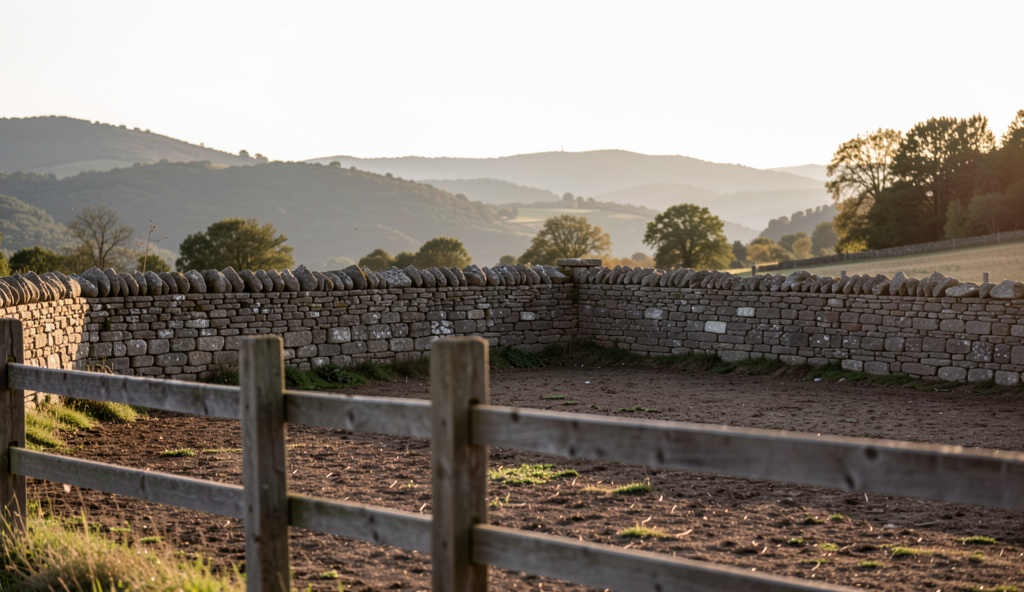
On the Cévenol foothills, paths are often surfaced with stone and bordered by low walls. Marks may sit on a rock at knee height rather than on a post. In late summer, vegetation can hide a mark, so riders should scan both sides of the track.
How do you prepare a multi-day equestrian trek?
A multi-day trek is a small project. It has stages, nights, water points and luggage, and each element needs a decision before departure.
Stages. A stage is the distance covered between two stops. A rider plans it around the slowest horse in the group and around the terrain. A Cévenol plateau stage on a high-altitude meadow is easier than a stage crossing a rocky valley.
Nights. Options include a guesthouse, a farm, a gîte or a bivouac. Each choice affects what the rider carries. A guesthouse night allows a lighter saddlebag.
Water. Horses drink several times a day in warm weather. The route must include reliable water points, and the rider should carry a backup supply.
Saddlebags. Weight is split between two bags, one on each side. The load stays balanced and below the level that would press on the horse's back. Heavy items go at the bottom, near the saddle.
The horse. A trekking horse needs conditioning before a long route. Short rides in the weeks before departure build fitness and check the fit of the saddle.
At dusk on a Cévenol plateau, the group settles the horses on a high meadow before the night. That image sums up the format: slow travel, planned stages and a horse that carries part of the load.
What should a rider check before booking?
Four checks cover most of the risk.
- The centre's affiliation. An affiliated centre issues the FFE licence and follows federation rules.
- The instructor's qualification. A state-qualified instructor leads lessons and holds the relevant teaching diploma.
- The horse's workload. A horse that works several hours a day needs rest days. A rider can ask how the centre rotates its animals.
- The cancellation terms. Weather, ground conditions and horse health can change a booking at short notice.
A rider who checks these points before paying knows what the season will actually contain: the weekly slot, the licence, the hours on the card and the terrain under the hooves.